Skip to content

Projects

Machine learning & data

In production

Demand forecasting

Python and SQL pipelines over the group’s transaction data that forecast demand per school site for kitchen planning. In the first month, food waste fell 7.9% at the five schools that wasted the most.

  • Python
  • SQL
  • pandas
  • scikit-learn
  • Forecasting
In production

Anomaly detection and dashboards

Live transaction data from every school site, consolidated into operational dashboards. Automated anomaly detection flags sites that underperform, and the operations team follows up on the flags every day.

  • SQL
  • Python
  • ETL
  • Anomaly detection
  • Dashboards
In production

ERP modules and legacy migration

Java modules for the in-house ERP: Quarkus REST services with JavaFX, React and React Native front ends for ordering and operations. Much of the work is moving legacy code onto current stacks while the business keeps running on it.

  • Java
  • Quarkus
  • REST
  • JavaFX
  • React
  • React Native
  • Keycloak
In production

Delivery on AWS and Docker

Web apps, microservices, automations and model pipelines packaged as Docker containers and deployed on AWS, with Git-based CI/CD.

  • AWS
  • S3
  • Docker
  • CI/CD
  • Linux

The code and data stay with the company, so I keep the details here short. Want to know more, or whether something similar could help your operation? Get in touch →

Engineering & systems

In production

Industrial PC data pipeline

A custom application on a locked-down industrial PC. It uploads its data over SFTP into an S3 bucket, and a custom ERP module manages the device and its data. I owned it from requirements through deployment and servicing.

  • SFTP
  • S3
  • ERP module
  • Systems integration
In production

Customer product portfolio

A customer-facing React app that builds product sheets from backend data and adapts them to each customer’s preferences and previous orders, replacing static documents.

  • React
  • REST
  • PostgreSQL

Games

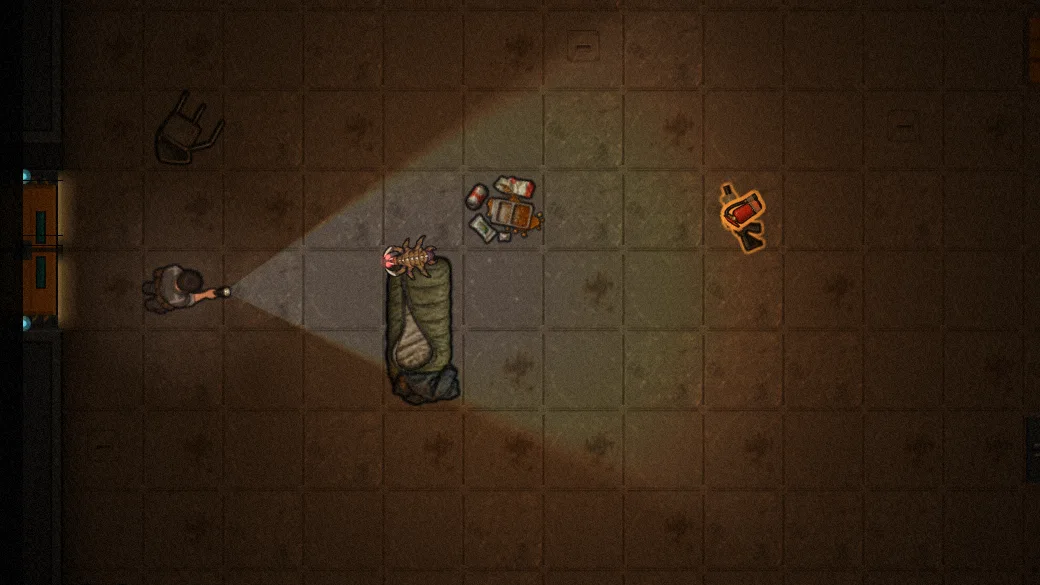
X-STRANDEDA derelict ship, a hive that hunts by sound, and one flashlight. My own WebGL2 engine, playable in the browser.Enter the dark

2026 · Solo · Live alpha

X-Stranded: technical details

  • Own WebGL2 renderer with 2D lighting, shadows, emissive and post-processing passes. No game engine.
  • Fixed 60 Hz simulation on seeded random streams; the same seed always builds the same deck.
  • Deterministic maths module (fdlibm sin, cos, atan2, exp, log) so V8 and Safari’s JavaScriptCore produce bit-identical states.
  • Online co-op in testing: lockstep netcode over a Cloudflare Durable Object room server that only relays inputs.
  • Positional audio on the Web Audio API, using the same distance falloff the aliens hear with.
  • 139 automated tests on node:test. Runs on desktop and mobile, built with esbuild, served static from Cloudflare.

Finished · Playable in your browser

Child of Anon

My first game. I built the first version in Python when I was young and finished it years later as an auto-scrolling climber. The goal was to finish something I had started.

  • Phaser 3 and TypeScript, built with Vite.
  • Procedural levels across several biomes, combat with spells and mana.
  • Online VS on a Cloudflare Worker with one Durable Object per room, WebSocket hibernation and 4-character room codes.
  • Touch controls and landscape mode for phones.

Websites